Hiring a Deck Builder Terms Explained: A Plain-English Glossary
If you are getting quotes for a new deck, porch, or pool deck in Buffalo or Western New York, this hiring a deck builder glossary puts the jargon in plain English. It helps you read an estimate line by line, ask sharper questions, and spot a thin bid before you sign anything. Each entry starts with a definition you can use on its own, then explains what the term means for your project and your budget. No sales talk, just the words a deck builder actually uses.
- Footings: the concrete bases that hold your deck up
- Frost Depth: how deep footings must go to beat freeze-thaw
- Framing: the structural skeleton under the deck boards
- Ledger Board: where the deck attaches to your house
- Snow Load: the weight of snow your deck must carry
- Joists and Beams: the horizontal bones of the frame
- Composite Decking: low-maintenance boards made from wood and plastic
- PVC Decking: all-plastic boards that shrug off moisture
- Pressure-Treated Lumber: wood treated to resist rot
- Deck Railing: the guard system around edges and stairs
- Building Permit: the town's written permission to build
- Code Compliance: meeting your town's safety rules
- Inspection: the town checking the work at key stages
- Estimate vs. Quote: a ballpark number versus a firm price
- Scope of Work: the written list of exactly what gets built
- Change Order: a written update when the plan changes mid-job
- Drainage: moving water away from the deck and house
- Flashing: the metal barrier that keeps water out of the ledger
Structure and Framing Terms
These are the words that describe what holds your deck up. They matter most in Western New York, where frost and snow put real stress on a frame.
Footings
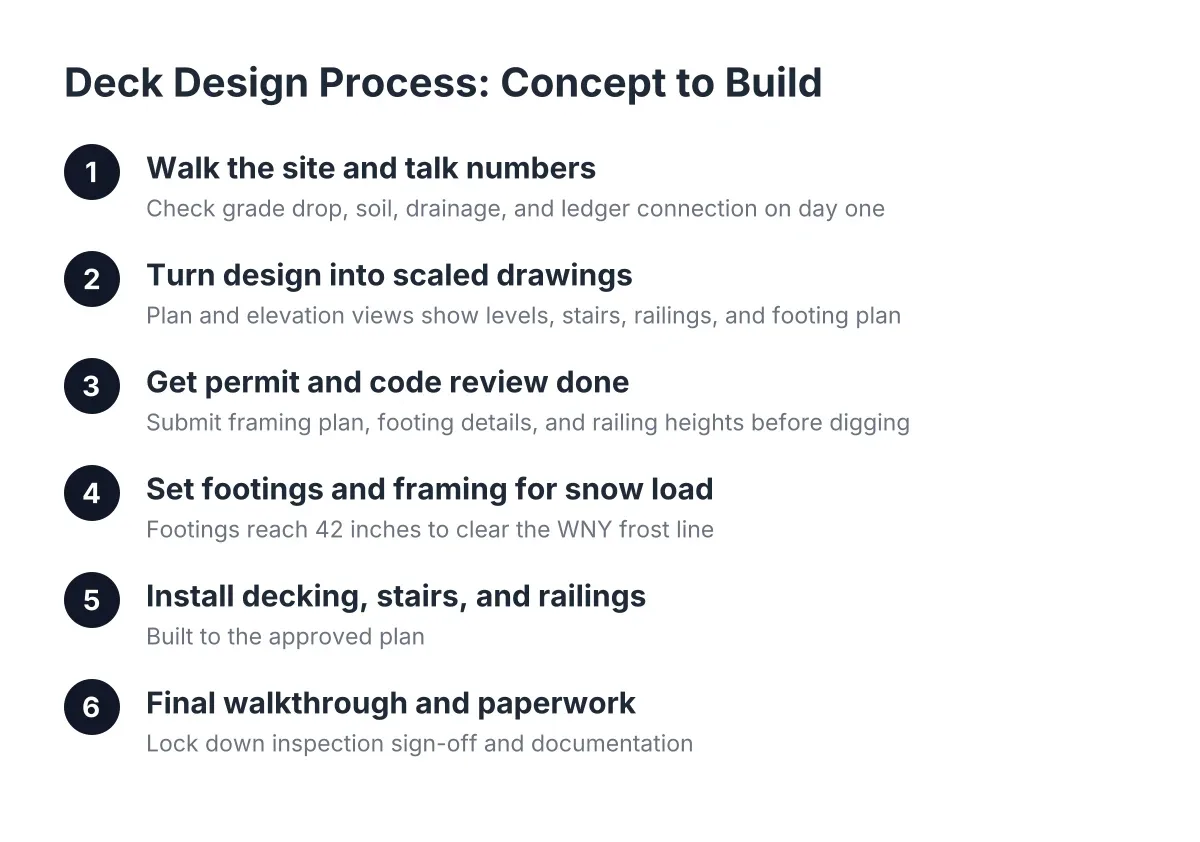
Footings are the concrete bases, set in the ground, that carry the entire weight of your deck. Everything above them depends on them being deep enough and wide enough for the soil and the load. In WNY, footings have to sit below the frost line or the ground will heave them upward each winter. If a quote does not mention footings at all, ask how the deck will be supported.
Frost Depth
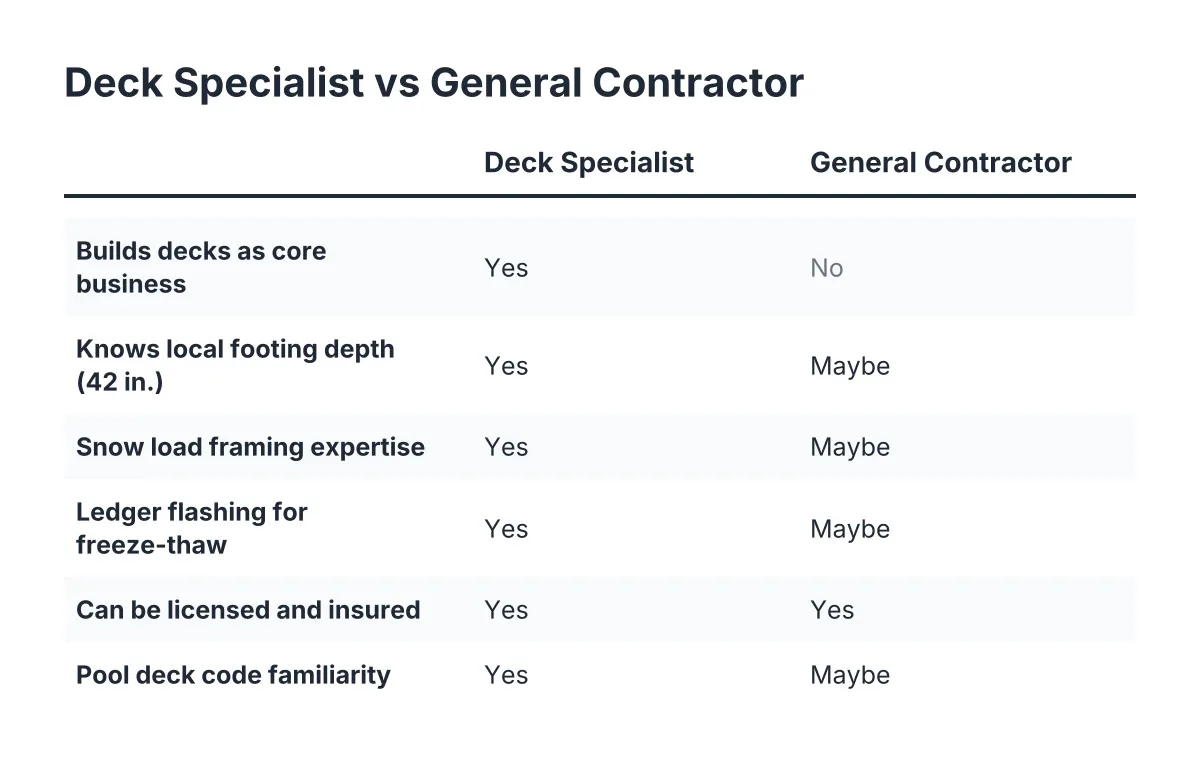
Frost depth is how far down the ground freezes in winter, and it sets the minimum depth for deck footings. Around Buffalo, builders dig footings about 42 inches deep so they sit below the freeze line. Footings that stop short get pushed up by freeze-thaw cycles, which can rack the whole frame over a few winters. A builder who brings up frost depth without being asked is thinking about your deck ten years out, not just at the final walkthrough.
Framing
Framing is the structural skeleton of the deck, the posts, beams, and joists that sit between the footings and the deck boards. Good framing is what keeps a deck solid underfoot instead of bouncy or sagging. Framing is also where snow load gets handled, through post spacing and beam sizing. When comparing quotes, framing details tell you more about long-term quality than the choice of deck boards.
Ledger Board
A ledger board is the horizontal board that attaches a deck to the house and carries part of its weight. It is one of the most common failure points on older decks, usually because it was bolted wrong or water got behind it. A proper ledger is fastened into the house structure, not just the siding, and protected with flashing. Ask any builder how they attach and flash the ledger; the answer tells you a lot.
Snow Load
Snow load is the weight of accumulated snow that a deck's frame must be built to carry. Buffalo's lake-effect snow makes this a bigger deal here than in most of the country. A frame sized for snow load uses closer post spacing, larger beams, or both, compared to a fair-weather design. If a builder from outside WNY never mentions snow load, that is a red flag worth raising.
Joists and Beams
Joists and beams are the horizontal framing members of a deck; beams carry the main weight across the posts, and joists sit on the beams to support the deck boards. The spacing between joists depends on the decking you choose, since composite boards often need closer spacing than wood. Undersized or overspaced joists lead to soft, flexing spots underfoot. A clear quote lists joist size and spacing, not just "framing."
Materials and Finish Terms
Deck boards and railings are the parts you see and touch every day, so this is where most homeowners spend their decision time.
Composite Decking
Composite decking is a deck board made from a blend of wood fibers and plastic, designed to resist rot, splinters, and fading without regular staining. For a composite deck in WNY, the draw is low maintenance through freeze-thaw winters: no sanding, no sealing, just cleaning. Composite costs more up front than pressure-treated wood but saves on upkeep over the years. It also needs a frame built to its specific spacing requirements, so the framing and the boards have to be planned together.
PVC Decking
PVC decking is a deck board made entirely of plastic, with no wood content to absorb moisture. That makes it a strong choice around pools and in climates with hard freeze-thaw swings, since there is nothing in the board to swell or rot. It usually sits at the top of the decking price range. For a pool deck that stays wet all summer and frozen all winter, PVC is worth a conversation.
Pressure-Treated Lumber
Pressure-treated lumber is wood that has been infused with preservatives under pressure to resist rot and insects. It is the standard material for deck framing and the budget option for deck boards. Treated wood decking works fine but needs sealing or staining on a regular schedule to hold up in WNY weather. Most decks here use treated lumber for the frame even when the surface is composite or PVC.
Deck Railing
A deck railing is the guard system of posts, rails, and balusters that runs along deck edges and stairs to keep people from falling. Local code typically requires railings once a deck rises above a certain height off the ground, so check your town's rules. Railing is also a major cost line; metal and composite railing systems cost more than wood but need less upkeep. On an elevated or multi-level deck, railing can be a surprising share of the total price.
Permits, Paperwork, and Pricing Terms
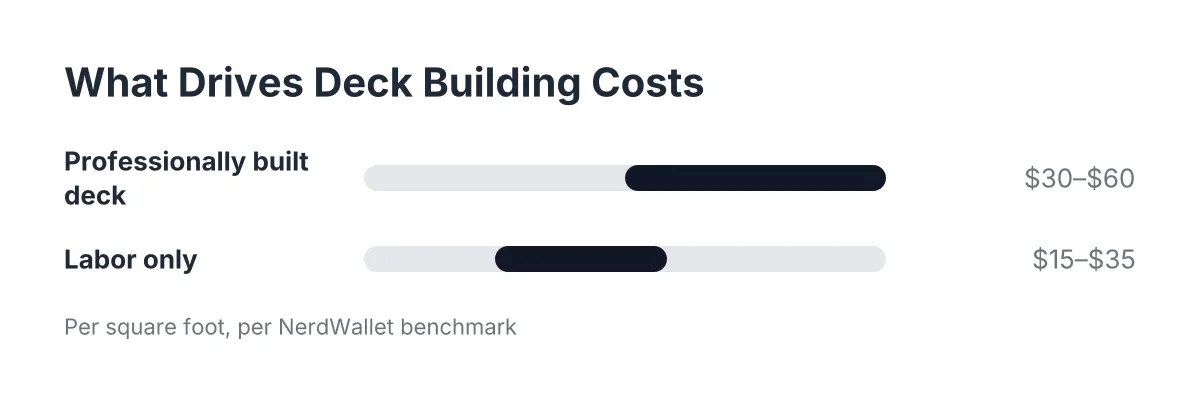
This part of the hiring a deck builder glossary covers the office side of the job, where most disputes actually start. Understanding these terms before you sign is the cheapest insurance you can get; it is the core homework of hiring a deck builder. For a fuller breakdown of what drives the numbers, see how much hiring a deck builder costs.
Building Permit
A building permit is written approval from your town or city to build a structure like a deck. In Erie County, each town runs its own permit office, and most decks need one. A builder who handles permits as part of the job saves you paperwork and signals they expect the work to be inspected. If a builder suggests skipping the permit, walk away; unpermitted decks cause trouble at inspection time and at resale.
Code Compliance
Code compliance means the deck meets the building safety rules your town enforces, covering things like footing depth, railing height, and stair dimensions. It is not optional, and it is not a premium upgrade; it is the floor for safe work. A builder who plans for code compliance up front builds it into the design instead of fixing problems after a failed inspection. Ask any builder how they handle code questions for your specific town.
Inspection
An inspection is a visit from a town building official to check the work at set stages, usually after the footings are dug and again when the deck is done. Inspections protect you, since someone with no stake in the sale verifies the structure. A builder comfortable with inspections will schedule them without prompting. Passed inspections also give you paper proof of sound work when you sell the house.
Estimate vs. Quote
An estimate is a ballpark figure based on rough information, while a quote is a firm price tied to a defined scope of work. Knowing the difference keeps you from treating a phone-call guess as a commitment. A real quote comes after someone has seen your site, talked through materials, and put the details in writing. Comparing one builder's estimate against another's quote is comparing apples to oranges.
Scope of Work
A scope of work is the written description of exactly what the builder will do, from footings to final railing. It is the document that settles "I thought that was included" arguments before they happen. A good scope names materials, sizes, and what is excluded, like old deck removal or landscaping repair. The tighter the scope, the fewer surprises on the final bill.
Change Order
A change order is a written agreement that updates the price and scope when something changes after the contract is signed. Changes happen on real jobs; you might upgrade to composite decking mid-project, or the crew might find rot that has to be fixed. Handled in writing, change orders keep costs transparent. Handled verbally, they are how final bills end up far above the quote.
Water and Weather Terms
Drainage
Drainage is how water moves off and away from your deck, its footings, and your house foundation. A deck built without a drainage plan can trap water against the house or pool it around the posts, which speeds up rot and frost heave. Small details carry this load: board gaps, grading under the deck, and where downspouts discharge. In a wet, freezing climate like Buffalo's, drainage is a design item, not an afterthought.
Flashing
Flashing is the metal or waterproof barrier installed where the deck's ledger board meets the house, directing water away from the connection. Without it, water seeps behind the ledger, rots the house framing, and quietly weakens the deck's main attachment point. Flashing is cheap during construction and expensive to add later. It is a fair test question for any builder: ask how they flash the ledger and listen for a specific answer.
Using These Terms
What this hiring a deck builder glossary gives you is a working vocabulary for the whole project, from the first estimate to the final inspection. You can now read a quote line by line, ask why one bid includes flashing and permit handling while another stays vague, and judge whether a builder has planned for WNY frost, snow load, and drainage. The builders doing solid work will be glad you asked.
If you need deck building, WNY Deck Builders can help.
Prefer to talk it through? Call (716) 317-4901 — a quick call is usually the fastest way to get a straight answer for your situation.