Deck Staining and Sealing Timing in Buffalo: A Step-by-Step Weather Guide
If you just repaired a deck, or you are trying to save one before winter, understanding deck staining weather timing matters as much as the product you buy. Stain a deck too early, too late in the season, or right before rain, and the finish peels within a year. In Buffalo and Western New York, the window for this work is shorter than most product labels assume. This guide walks through the full process step by step, from checking the wood to picking the right week on the calendar, so the work holds up through lake-effect winters and freeze-thaw springs.
One note before you start. Staining and sealing protect sound wood. They do not fix soft boards, a wobbly deck railing, or rotted framing. If you have structural problems, handle the deck repair and restoration work first, then finish the surface. Sealing over rot locks moisture in and speeds up the damage you were trying to stop.
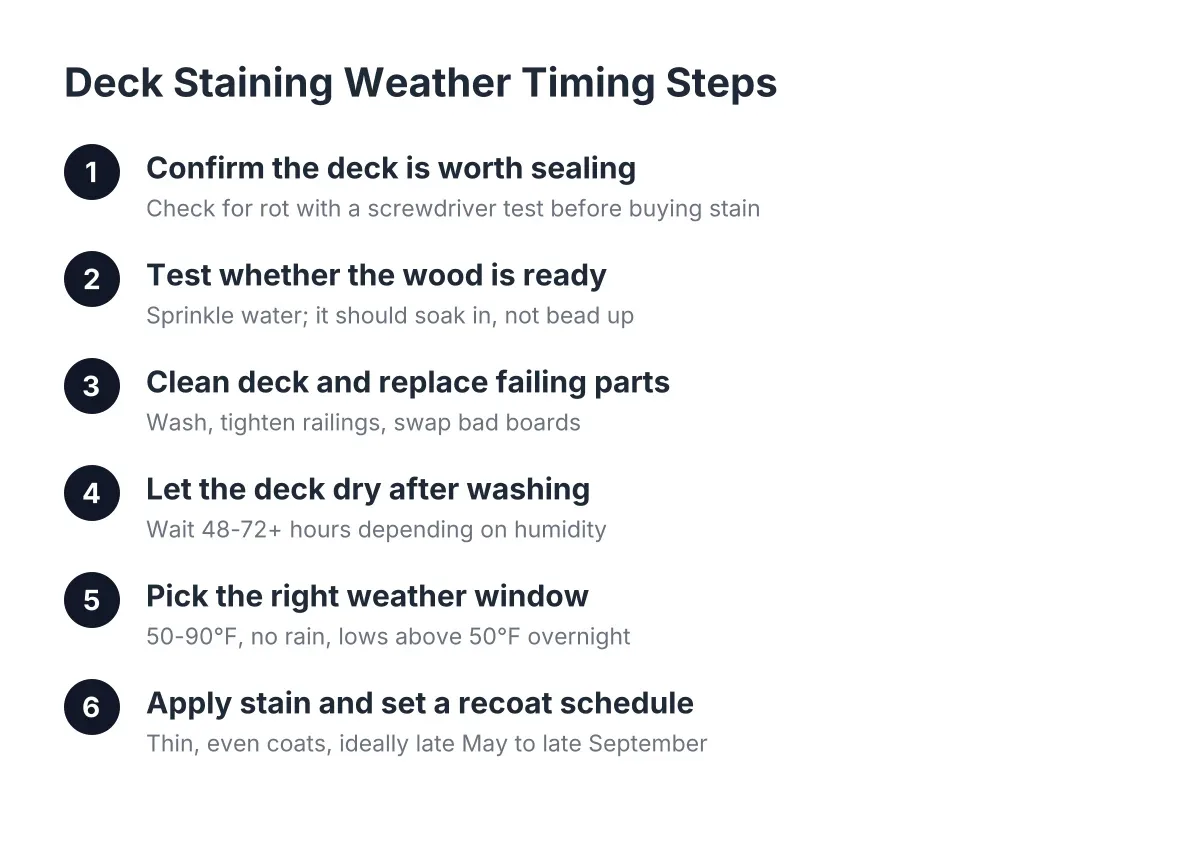
Step 1: Confirm the Deck Is Worth Sealing
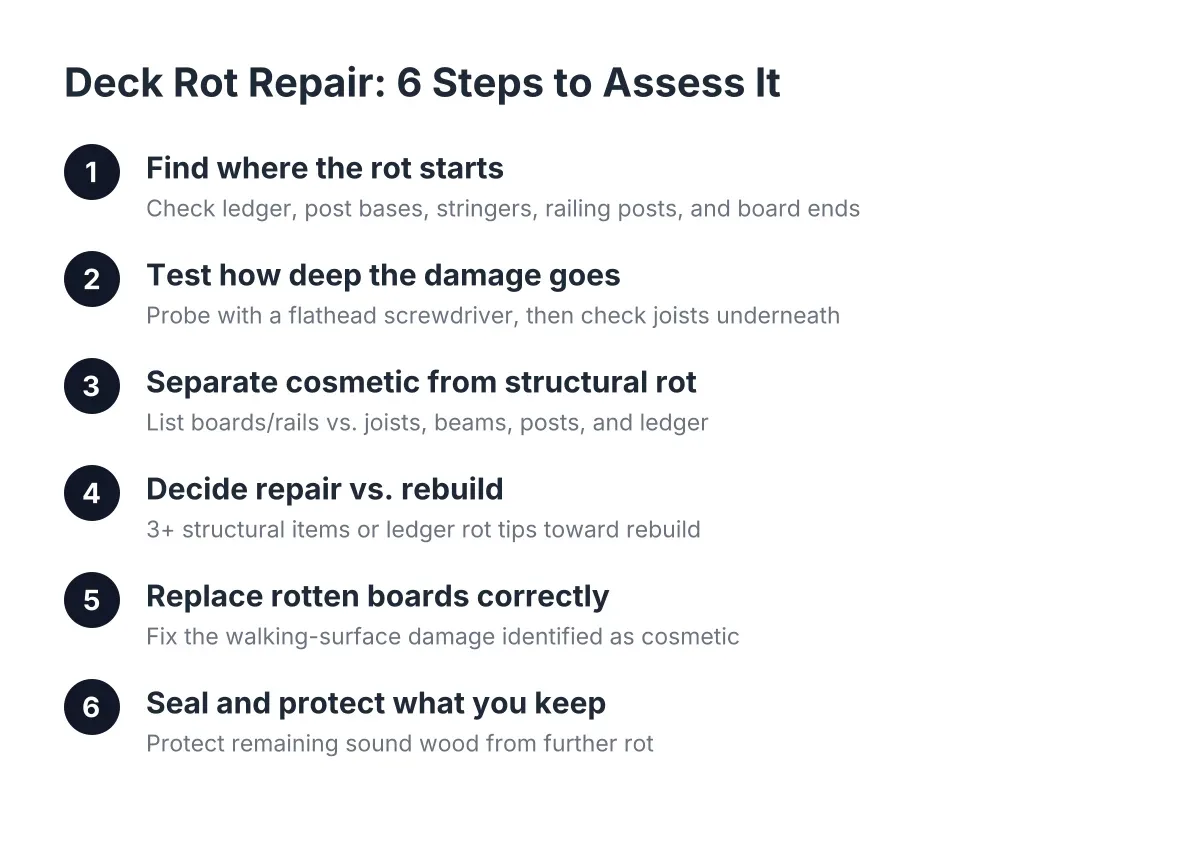
Walk the whole deck before you buy a gallon of anything. Press a screwdriver into boards near the house, around posts, and at stair stringers. If the tip sinks in easily, that is rot, and no finish will save that board. Deck wood rot repair comes first; swap the bad boards, then stain the whole surface so the color matches.
Check the framing underneath too. Look at the ledger board where the deck meets the house, the joists, and the post bases. A few gray, weathered surface boards are a refinishing job. Soft joists or a ledger pulling away from the house is a structural job, and in that case a professional inspection is worth the call before you spend a weekend on finish work.
Also note what is on the deck now. Old solid stain or deck restore paint changes your plan. New penetrating stain will not soak through an existing film finish, so anything flaking has to come off by sanding or stripping before Step 3.
Step 2: Test Whether the Wood Is Ready for Stain
New pressure-treated lumber comes soaked with preservative and often with mill moisture. Stain it too soon and the finish sits on top, turns blotchy, and peels. Here is the simple test: sprinkle water on a few boards. If the water beads up, the wood is still too wet or too sealed to accept stain. If it soaks in within a minute or two, you are ready.
For a brand-new deck in Western New York, that usually means waiting one to three months after construction, sometimes longer if the lumber arrived wet or the summer has been humid. Kiln-dried lumber may be ready sooner. Do not go by a fixed number of weeks; go by the water test. The same test works on an older deck after a wet spring.
Composite decking is the exception. If your rebuild or new pool deck used composite boards, skip staining entirely. Composite does not take stain and does not need it, which is one reason many Buffalo homeowners replacing a rotted wood deck switch to it.
Step 3: Clean the Deck and Replace What Is Failing
Stain only bonds to clean, sound wood. Start by pulling everything off the deck, then sweep and clear debris from the gaps between boards. Packed leaves and dirt in those gaps trap water, and trapped water is what starts rotten deck boards in the first place.
Then work through this list:
- Replace any boards that failed the screwdriver test in Step 1.
- Drive down or replace popped nails and screws.
- Tighten loose deck railing posts and balusters; a railing should not move when you lean on it.
- Wash the deck with a deck cleaner or a careful low-pressure wash to remove gray fibers, mildew, and old failing finish.
- Sand rough spots and any glossy patches where old sealer still beads water.
If you pressure wash, keep the tip moving and the pressure modest. Blasting the surface raises the grain and gouges soft spots. A brightener after cleaning helps open the wood so stain penetrates evenly.
Step 4: Deck Staining and Sealing Weather Timing After Washing
After washing, the deck needs to dry before any finish goes on. In dry summer weather, plan on at least 48 hours. In a humid Buffalo July, or if the deck sits in shade most of the day, give it 72 hours or more. Run the water-bead test again if you are unsure; if water still darkens the wood slowly instead of soaking in fast, wait another day.
Moisture is the number one reason deck finishes fail early around here. The wood looks dry on top while the lower half of each board is still wet. Stain traps that moisture, and the first freeze-thaw cycle pushes the finish right off the surface. Patience at this step is free, and it buys you years.
Step 5: Pick the Right Weather Window
Getting the weather timing right is critical when staining and sealing a deck in Western New York. Most stains want surface and air temperatures between about 50 and 90 degrees, and those temperatures need to hold overnight, not just at noon. Check the forecast for all of the following before you open the can:
- No rain for at least 24 hours before you start, and 24 to 48 hours after you finish.
- Overnight lows staying above 50 degrees while the stain cures.
- No heavy dew expected the first night; a wet film can turn cloudy.
- Moderate humidity; a muggy stretch slows curing.
- Avoid staining in direct midday sun, which flashes the stain dry before it penetrates.
In practice, the reliable Buffalo window runs from late May through late September, with early fall often the best bet. September usually brings mild days, cooler sun, and lower humidity. By mid-October, overnight lows drop fast and the gamble is not worth it. If you miss the window, wait for spring; a finish applied in cold weather fails faster than bare wood weathers.
How Late in Fall Can You Handle Deck Staining Weather Timing in Buffalo?
In Buffalo, the practical cutoff for staining a deck is usually early to mid-October, once overnight lows start dipping below 50 degrees. Stain cures slowly in cold air, and an early frost can ruin a fresh coat overnight. If the forecast cannot promise two mild days and two mild nights in a row, hold the project for spring.
A deck that spends one winter bare and clean does better than a deck wearing a half-cured finish. Sweep it, keep the board gaps clear, and shovel snow along the length of the boards instead of across them.
Step 6: Apply Stain in Thin, Even Coats
Choose a penetrating semi-transparent or semi-solid stain for most wood decks; these soak in rather than forming a film, so they wear away gradually instead of peeling. Film-forming products and deck restore paint coatings can work on badly weathered boards, but once applied they commit you to recoating that same system, and removal later is a big sanding job.
Work two or three boards at a time from end to end to avoid lap marks. Use a brush or pad on the field, and keep a brush handy to back-brush puddles. Thin coats are the rule. One coat that soaks in beats two coats where the second sits on top and stays tacky. Coat the end grain at stairs and board ends heavily; end grain drinks water and is where rot starts, so understanding weather and timing considerations when staining a deck prevents wood damage before it begins.
Do railings, balusters, and stair risers first, then the deck surface, so you are not dripping on finished boards. Give the finish the full cure time on the label before moving furniture back, usually 24 to 72 hours depending on temperature.
Does a Pool Deck Change Staining and Weather Timing?
Yes, a pool deck compresses the timing on both ends. Constant splash from an above ground pool keeps the wood wetter than a standard patio deck, so plan the project for a dry stretch before the pool opens, or close the pool area for several days midseason. The finish needs its full cure before wet feet and dripping swimsuits hit it.
Suppose a homeowner in Cheektowaga finishes an above ground pool deck in late June and wants to swim by the Fourth of July. In that scenario, the smarter plan is often to swim on bare wood all summer and stain in September, once the pool closes and the boards have had dry weeks to shed moisture. Chasing a July window around daily swimming rarely ends well. Also use a finish rated to handle pool chemicals, since chlorinated splash breaks down some sealers early.
Step 7: Put the Deck on a Recoat Schedule
One good staining is not permanent. In Western New York, lake-effect snow sits on decks for months, and the spring freeze-thaw cycle works water into every surface check in the wood. Horizontal surfaces take the worst of it. Expect to recoat the deck surface every two to three years and vertical surfaces like railings every four to five, sooner on a pool deck.
Each spring, do a five-minute check. Sprinkle water on the deck; if it soaks in fast instead of beading, the sealer is spent and it is time to plan a recoat for the next dry window. Catching it that year is a cleaning and one coat. Letting it go three more years often means stripping, sanding, and replacing boards, which is when homeowners start searching for deck refinishing near me instead of doing a Saturday recoat.
When Staining Is Not the Answer
Be honest with yourself at Step 1. If the screwdriver sinks into multiple joists, the ledger is soft, or the deck bounces and sways, you are past finish work. Around Buffalo, decks built on shallow footings heave with the frost, and that movement loosens connections year after year; code here calls for footings at 42-inch frost depth for good reason. A stain cannot fix any of that.
As a rough rule, if more than a quarter to a third of the boards and any framing members are failing, replacement usually makes more financial sense than piecemeal repair. The money is not wasted either way; according to NerdWallet, the National Association of Realtors' 2023 Remodeling Impact Report found homeowners recover 89% of the cost of a new wood deck at resale. Get an in-person assessment of the framing before committing to either path. A deck that is sound underneath deserves the full cleaning, staining, and sealing process above. A deck that is failing underneath deserves a straight answer, not another coat of stain.
If you need deck building, WNY Deck Builders can help.
Prefer to talk it through? Call (716) 317-4901 — a quick call is usually the fastest way to get a straight answer for your situation.