Deck Cost Estimates Terms Explained: A Plain-English Glossary
If you are a Buffalo homeowner collecting quotes for a new deck, porch, or pool deck, the paperwork comes loaded with trade terms. This deck cost estimates glossary breaks each one down in plain English so you can read a quote line by line, ask sharper questions, and spot a thin bid before you sign anything. Every definition stands on its own, so you can skim to the word that confused you and move on. No sales pitch, just the vocabulary a deck builder actually uses.
- Estimate: a builder's educated cost guess
- Bid: a firm price offer
- Scope of Work: what the job includes
- Allowance: a placeholder budget line
- Change Order: a written mid-project price change
- Cost Per Square Foot: price divided by deck size
- Footings: the concrete legs under your deck
- Frost Depth: how deep footings must go
- Framing: the deck's structural skeleton
- Ledger Board: where the deck attaches to the house
- Joists: the boards that hold up the decking
- Snow Load: the weight your deck must carry in winter
- Composite Decking: wood-plastic boards that resist rot
- PVC Decking: all-plastic boards for wet spots
- Pressure-Treated Lumber: wood treated to resist decay
- Deck Railing: the guard system around the edges
- Building Permit: the town's written approval
- Code Compliance: meeting local building rules
Pricing and Paperwork
These are the money and contract terms you will meet first, and the part of a deck cost estimates glossary most people actually need. Read this section before you compare any two quotes.
Estimate: Understanding Deck Cost Estimates
An estimate is a builder's educated guess at what your project will cost, based on size, materials, and site conditions. It is not a binding price; the number can shift once the builder sees what is under your old deck or in your soil. A good estimate lists its assumptions so you can see what might change. If a builder hands you one number with no breakdown, ask for the detail behind it. Our guide to what actually sets composite deck pricing in Buffalo walks through the biggest cost drivers line by line.
Bid
A bid is a firm price offer to do a defined scope of work for a stated amount. Unlike an estimate, a bid commits the builder to the number, as long as the scope does not change. When you compare bids, make sure each one covers the same work; a lower bid that skips footings or railing is not actually cheaper. The scope of work document, covered next, is what makes bids comparable.
Scope of Work
A scope of work is the written list of everything the project includes: demolition, footings, framing, decking, railing, stairs, and cleanup. It is the single most important page in your quote packet. Anything not listed in the scope is usually extra, which is where surprise costs come from. Before signing, confirm the scope names the decking material, railing type, and who pulls the permit.
Allowance
An allowance is a placeholder dollar amount in a quote for an item you have not chosen yet, like railing style or stair lighting. If your final pick costs more than the allowance, you pay the difference. Low allowances make a quote look cheaper than the finished deck will be. Ask whether each allowance reflects the product you actually want.
Change Order
A change order is a written agreement that changes the project's scope, price, or schedule after the contract is signed. Adding a bench, upgrading to composite decking mid-build, or hitting buried concrete all trigger one. Honest builders put every change in writing before doing the work. Verbal changes are where budgets quietly fall apart.
Cost Per Square Foot
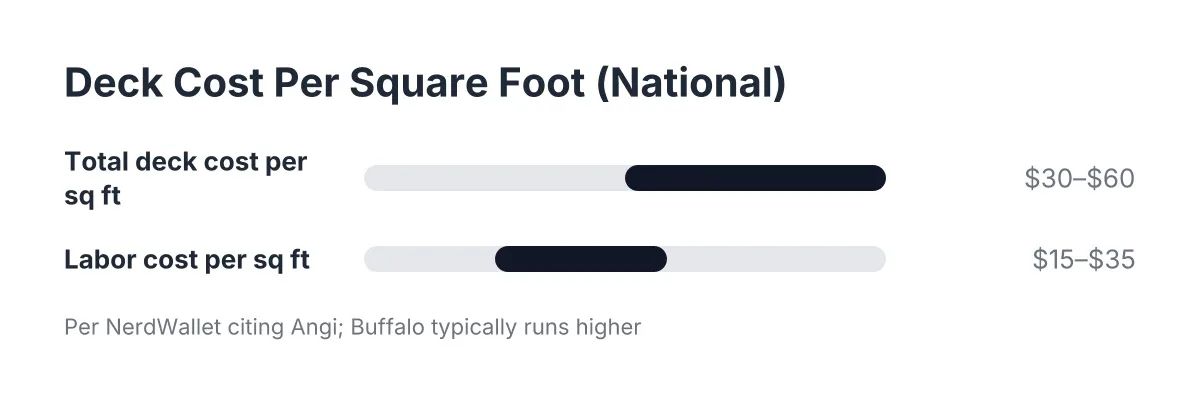
Cost per square foot means the total project price divided by the deck's area, and it is the most common way people compare deck cost estimates. It is useful for rough budgeting but misleading on its own. A small elevated deck with stairs costs more per square foot than a big simple platform, because stairs, railing, and footings do not shrink with the deck. Use it as a starting point, not a verdict.
Structure and Site Work
Most of a deck's cost hides below the boards you walk on. These terms explain where that money goes.
Footings
Footings are the concrete supports poured into the ground that carry your deck's weight. In Western New York, footings must reach below the frost line so freeze-thaw cycles cannot heave the deck out of level. Digging and pouring footings is real labor, which is why a quote for an elevated deck includes a meaningful structural line. If a bid barely mentions footings, that is a question to ask.
Frost Depth
Frost depth is how deep the ground freezes in winter, and it sets how deep your footings must go. Around Buffalo, builders dig footings well below that line, commonly to 42 inches, so frozen soil cannot push them upward. A deck on shallow footings will heave, tilt, and rack its framing over a few winters. This is one line item you never want a builder to shortcut.
Framing
Framing is the structural skeleton of the deck: the posts, beams, and joists that everything else sits on. Framing lumber and labor make up a large share of any quote, and the framing has to be sized for WNY snow load, not just summer foot traffic. Taller decks and multi-level decks need more framing, which is why height drives cost even when the square footage stays the same.
Ledger Board
A ledger board is the horizontal board bolted to your house that supports one side of an attached deck. It carries serious weight, so it must be properly flashed and fastened to keep water out of your wall. Bad ledger connections are a leading cause of deck failures, which is why inspectors look at them closely. If your quote covers "ledger flashing", that is a good sign the builder takes water seriously.
Joists
Joists are the repeated horizontal boards that sit on the beams and directly support your decking. Their size and spacing depend on the span and the decking material; many composite boards require tighter joist spacing than wood. Tighter spacing means more lumber and more labor, which shows up in the framing line of your quote. It is one reason a composite deck costs more than the boards alone suggest.
Snow Load
Snow load means the weight of snow a deck's structure is designed to carry. Buffalo's lake-effect snow makes this a real design input, not a formality; a deck framed for a mild climate can sag or fail under a heavy WNY winter. A local deck builder sizes posts, beams, and footings with snow load in mind. Ask any out-of-area or generalist contractor how they handle it.
Materials and Finishes
Decking and railing choices drive the visible part of your budget. Here is what the material names actually mean.
Composite Decking
Composite decking is boards made from a blend of wood fibers and plastic, designed to resist rot, splinters, and fading without yearly staining. A composite deck costs more upfront than pressure-treated wood but cuts maintenance to washing. In Buffalo's freeze-thaw climate, that durability is the main reason homeowners choose it. Composite comes in quality tiers, so two "composite" quotes can price differently for a reason.
PVC Decking
PVC decking is boards made entirely of plastic with no wood content, which makes them the most moisture-resistant option. That matters most for pool decks and shaded, damp yards where wood fibers would hold water. PVC usually sits at the top of the decking price range. If your project is an above ground pool deck, it is worth asking your builder to price PVC against composite.
Pressure-Treated Lumber
Pressure-treated lumber is wood infused with preservatives under pressure so it resists rot and insects. It is the standard material for framing and the lowest-cost option for decking. The tradeoff is maintenance: it needs cleaning and sealing on a regular schedule, and it can crack and splinter as it dries. Many Buffalo decks pair a pressure-treated frame with composite boards on top.
Deck Railing
Deck railing is the guard system around the edges and stairs of a deck, required by code once the deck sits above a certain height. Railing is priced by the linear foot, and material choice swings the number widely; aluminum and composite railing cost more than wood. On elevated decks, railing can rival the decking itself as a budget line. Check that your quote names the railing material, not just "railing included".
Permits and Approvals
Building Permit
A building permit is the written approval from your town or city that lets construction legally start. In Erie County, each town runs its own permit office, and most decks above grade need one. Permit fees and the time to get drawings approved belong in your quote, not as a surprise later. A builder who offers to skip the permit is handing you the risk, since unpermitted decks cause trouble at resale.
Code Compliance: Deck Building Standards and Estimates
Code compliance means the deck meets your local building rules for structure, railing height, stair dimensions, and attachment to the house. An inspector checks the work at set points, usually at footings and at final. Compliance is not a premium upgrade; it is the floor. When a builder talks about code compliance planning in the quote, it means fewer inspection surprises and no rebuilt stairs after the fact.
Using These Terms
With this deck cost estimates glossary in hand, you can read a quote line by line instead of skimming to the total. Check that the scope of work, footings, framing, railing, and permit all appear in writing, and ask about anything that is an allowance instead of a firm number. The builder who answers those questions plainly is the one worth hiring.
If you need deck building, WNY Deck Builders can help.
Prefer to talk it through? Call (716) 317-4901 — a quick call is usually the fastest way to get a straight answer for your situation.